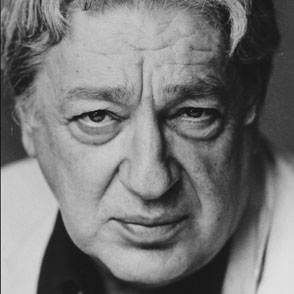
| Paolo Bonacelli
in
DE PROFUNDIS
by Oscar Wilde
directed by Riccardo Massai
translation and adaptation by
Masolino d’Amico
cello Simonpietro Cussino
mimic action by Simone Rovida
video Luca Scarzella and Francesco Lupi Timini - Stalkervideo organizational direction Raoul Gallini production Archètipo cultural association One hundred pages long in its complete version, De profundis (the title was attributed at partial publishing five years after the author’s death) is one of the most famous letters ever written. Destined originally to a single man, Lord Alfred Douglas nicknamed Bosie, it was written during the second of the two years of rigorous imprisonment Oscar Wilde was condemned to for homosexuality and contains the story of the fatal friendship between the famous poet and the young, spoiled, egotistic, and capricious aristocrat. The vivid evocation of the luxurious and amoral life led by the couple is now seen through the eyes of a man that has been deeply changed by sufferance – not to the point of making him become a repented bigoted yet aware of the values, mainly artistic, that the avidity of materialistic experiences had been making him neglect.
All this leads to seeing Christ as the supreme artist whose existence was a poem. Even as a redeemed sinner, Wilde remains an aesthete, while the eloquence of the playwright, always solemn, transforms a torrential vent into the performance of a paramount entertainer.
Masolino d’Amico | Wilde’s long letter is a dialogue in absence of/with Bosie who not only always denied having received the letter but even acknowledging its existence. The cell where Wilde was kept became Wilde’s brain that dug into the profoundness amid past memories and present time, recognizing himself older than his age and achieving an elderly awareness. Not by chance, Wilde shortly survived the experience of detention. As a result he discovered the meaning of pain, offering this letter written “in carcere et vinculis” the chance to make him free.
In our performance, the projections and audio supports accompany the narration, just as the lights support the inside rhythm rather than the outside space: the musical contributions create a gasp, practically marking Wilde’s appointments with his writing that took place for almost three months.
The letter was published unabridged only in 1959, in an attempt to protect the intimacy of a man much too often made public when he was in life, in a world that by then was perhaps freer from prejudices. Yet still today this writing makes us ponder on modern themes, such as the lack of approval of France’s proposal to Onu aiming at decriminalizing homosexuality. Eras and situations that seem to be far away and unacceptable are (unfortunately) still taking place in several parts of the world but even within ourselves where considering ”sin and suffering as sacred things, sounds dangerous.”
Riccardo Massai |